
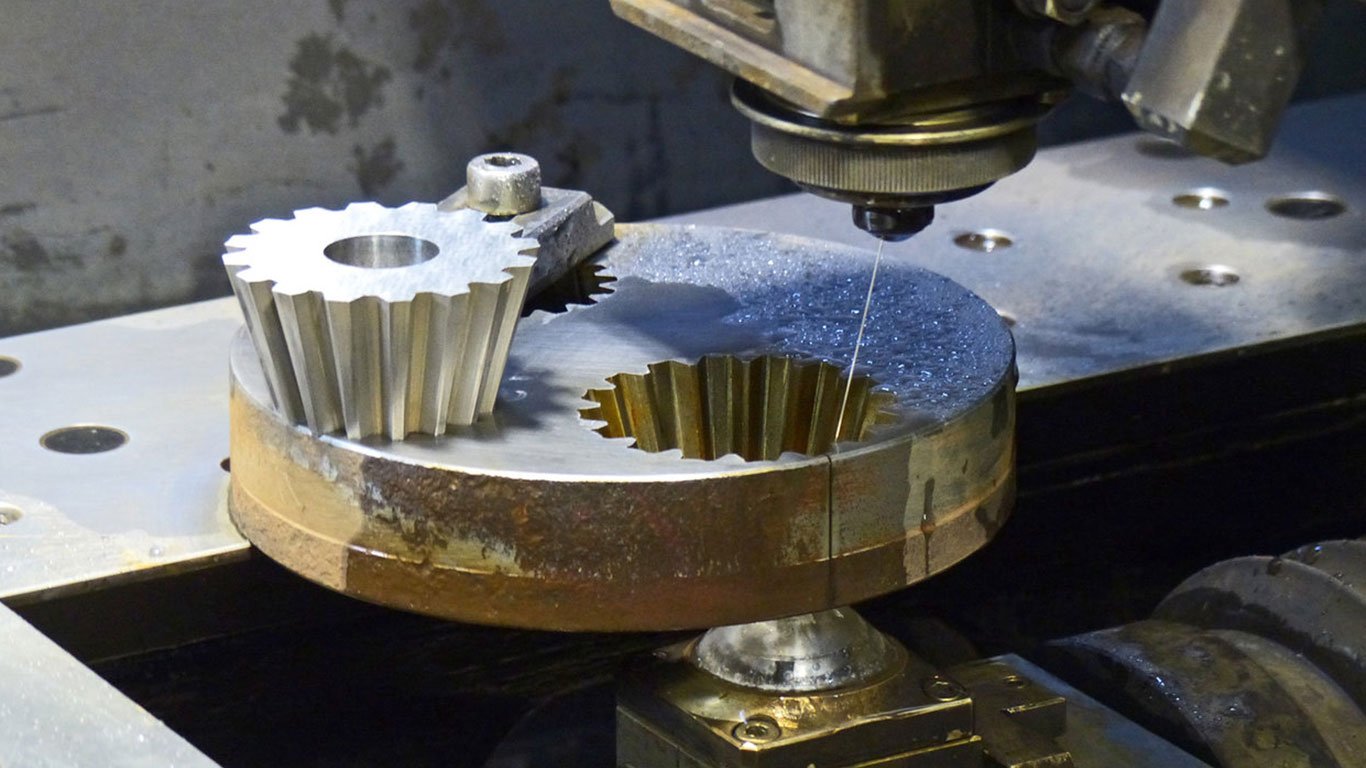
What is Wire Erosion? Where is it Used?

What Is Wire EDM?
Wire EDM is a CNC machining method based on the electrical discharge principle, enabling high-precision cutting of hard and electrically conductive metals. During machining, there is no physical contact between the wire and the workpiece; the metal is shaped by controlled electrical sparks.
In short: Wire EDM is a non-contact CNC cutting technology used for metal machining applications that require high precision.
How Does Wire EDM Work?
The wire EDM process is carried out through electrical discharges generated between a continuously moving thin wire (typically brass wire or molybdenum wire) and the workpiece.
In this process:
- The wire does not physically touch the workpiece
- Electrical sparks remove material from the metal surface at micron level
- Machining is performed in a controlled manner within a dielectric fluid
This method allows even hardened steels and special alloys to be machined with high precision.
Related content: EDM consumables used in wire EDM processes are critical for cutting quality and process stability.
What Are the Advantages of Wire EDM?
The main advantages of wire EDM machines include:
- High dimensional accuracy (micron-level tolerances)
- Superior performance on hard-to-machine materials
- Problem-free machining of complex and fine geometries
- No mechanical stress thanks to non-contact machining
- Smooth surface quality and low burr formation
These features make wire EDM indispensable, especially in mold making and precision manufacturing.
Where Is Wire EDM Used?
Mold Making Industry
- Plastic injection molds
- Sheet metal cutting and punching dies
- Precision mold components
In mold manufacturing, wire EDM enables complex geometries to be produced with high accuracy.
Automotive Industry
- Precision metal components
- Prototype manufacturing
- Hardened steel parts
In the automotive sector, wire EDM offers repeatable quality and dimensional accuracy.
Aerospace and Defense Industry
- High-strength alloys
- Metal parts with critical tolerances
- Special-profile components
In these industries, wire EDM is preferred due to its reliability and precision.
CNC Workshops and General Manufacturing
- Small and medium-scale production
- Prototyping work
- Precision metal machining applications
Wire EDM provides production flexibility for CNC workshops.
Which Materials Can Be Machined with Wire EDM?
Wire EDM can only be used on electrically conductive materials. The most commonly machined materials include:
- Hardened steels
- Stainless steel
- Aluminum alloys
- Copper and brass
- Carbide and special metal alloys
The hardness of the material is not a limitation for wire EDM.
| Feature | Wire EDM | CNC Milling |
|---|---|---|
| Machining type | Non-contact | Contact |
| Hard materials | Very suitable | Limited |
| Precision | Very high | High |
| Complex geometry | Very suitable | More limited |
| Tool wear | None | Present |
For this reason, wire EDM is preferred in precision applications where CNC milling is insufficient.
Who Is a Wire EDM Machine Suitable For?
Wire EDM machines are especially suitable for:
- Companies engaged in mold manufacturing
- Precision part manufacturers
- Industries requiring tight tolerances
- Workshops aiming to expand CNC production capacity
Related products: You can find detailed information about wire EDM cutting machines for different production needs.
What Should Be Considered When Choosing a Wire EDM Machine?
The following criteria should be considered when selecting a machine:
- Dimensions of the workpieces to be machined
- Required precision and surface quality
- Wire type and consumables to be used
- Service and technical support availability
- Long-term operating costs
The right choice directly affects production efficiency.
For detailed information about wire EDM machines and consumables and to determine the most suitable solution for your business, please contact us.
